Aquarium fertilizer and root tabs: which plants need what
Oct 4, 2026 · 4 min read
When aquarium plants need fertilizer, liquid fertilizer vs root tabs, how to place root tabs, and deficiency signs, with the plant types that feed each way.
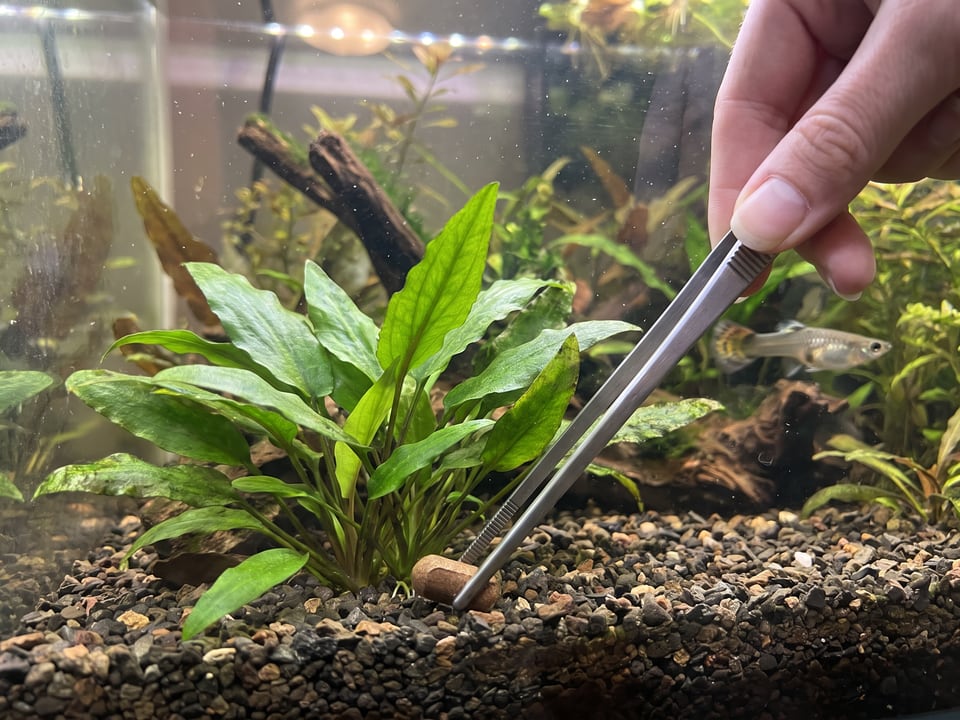
Aquarium plants take nutrients from the water, the substrate, or both, and the fertilizer should match. Rhizome plants, stem plants, mosses and floating plants feed mainly from the water and do well with a liquid all-in-one fertilizer. Cryptocorynes, sword plants, bulb plants and carpeting plants feed heavily through their roots and need root tabs when they grow in plain sand or gravel. Aquarium Co-Op recommends using both in a tank that has both kinds.
Why fish waste is not enough
Aquarium Co-Op explains that fish waste does not supply the right amounts of nitrate, potassium, phosphate and trace minerals for plants, and that tap water varies by region.
Which plants need liquid fertilizer
Plants that take most of their food from the water:
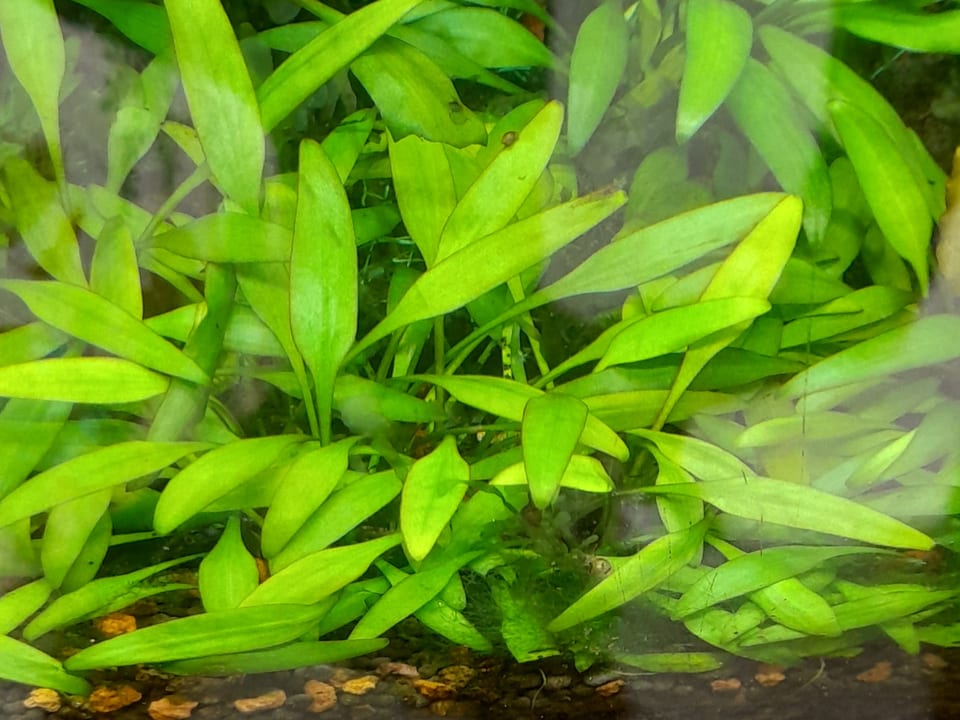
- rhizome plants tied to wood or rock, such as anubias, java fern and Bolbitis heteroclita;
- stem plants such as water wisteria, Ludwigia repens and Bacopa monnieri;
- mosses and floating plants, which have no roots in the substrate at all.
Aquarium Co-Op notes that stem plants can use root tabs too but prefer fertilizer in the water, and that mosses, floating plants, anubias and java fern do not need root tabs much.
Which plants need root tabs
Aquarium Co-Op’s root tab guide names cryptocorynes, sword plants, bulb plants, carpeting plants and plants that spread by runners as the ones that benefit most. In the catalog:
- cryptocorynes such as Cryptocoryne wendtii ‘Green’, Cryptocoryne lucens and Cryptocoryne beckettii;
- the bulb plant banana plant;
- runner plants such as dwarf sagittaria and jungle val;
- carpeting plants, listed under carpeting aquarium plants.
Buce Plant also calls crypts heavy root feeders that do well in a nutrient-rich substrate, and recommends root tabs if they grow in sand or gravel.
How to use root tabs
Aquarium Co-Op’s method:
- Push each tab as deep into the substrate as it will go, preferably under the roots of a plant, with tweezers or your fingers.
- Space them about 5 to 6 inches (12 to 15 cm) apart in a grid across the planted area, or about 4 inches apart in a densely planted tank.
- Ring a large plant, such as a sword, with several tabs.
- Add new tabs about once a month, especially in inert gravel or sand.
The same guide says commercial aquarium root tabs are safe for fish, shrimp and snails if one dissolves in the water, but warns that DIY tabs and fertilizers made for land plants can cause ammonia spikes.
Signs a plant is short of nutrients
Aquarium Co-Op describes two common ones. Short of iron, the newest leaves turn yellow or pale while their veins stay dark. Short of potassium, leaves develop small pinholes or the plant grows poorly.
Its advice is to start low, test the water weekly at first, and raise the dose slowly. It keeps nitrate at 25 to 50 ppm and warns that too much iron can lead to algae such as hair algae.
Match the dose to the tank
Each plant page in the catalog lists the light and CO₂ its source gives. In a tank of low light plants without added CO₂, follow Aquarium Co-Op’s advice to start low and raise the dose only when the plants show the signs above.
Frequently asked questions
Do I need root tabs in aquarium soil?
Aquarium Co-Op recommends regular root tabs especially with inert gravel or sand. In a nutrient-rich soil, watch root feeders for the deficiency signs above before adding tabs.
Can I use both liquid fertilizer and root tabs?
Yes. Aquarium Co-Op notes that root feeders still take some nutrients from the water, so the two together give the best growth in a mixed tank.
Will fertilizer cause algae?
Aquarium Co-Op warns that too much iron can lead to algae such as hair algae, and says extra potassium does not cause algae blooms. Start with a low dose and raise it slowly.