Plants for a goldfish tank: what survives and how to plant it
Oct 4, 2026 · 4 min read
Goldfish eat and uproot soft plants. Tough choices for a goldfish tank: anubias, java fern and bolbitis tied to wood or rock, plus cool-water plants.
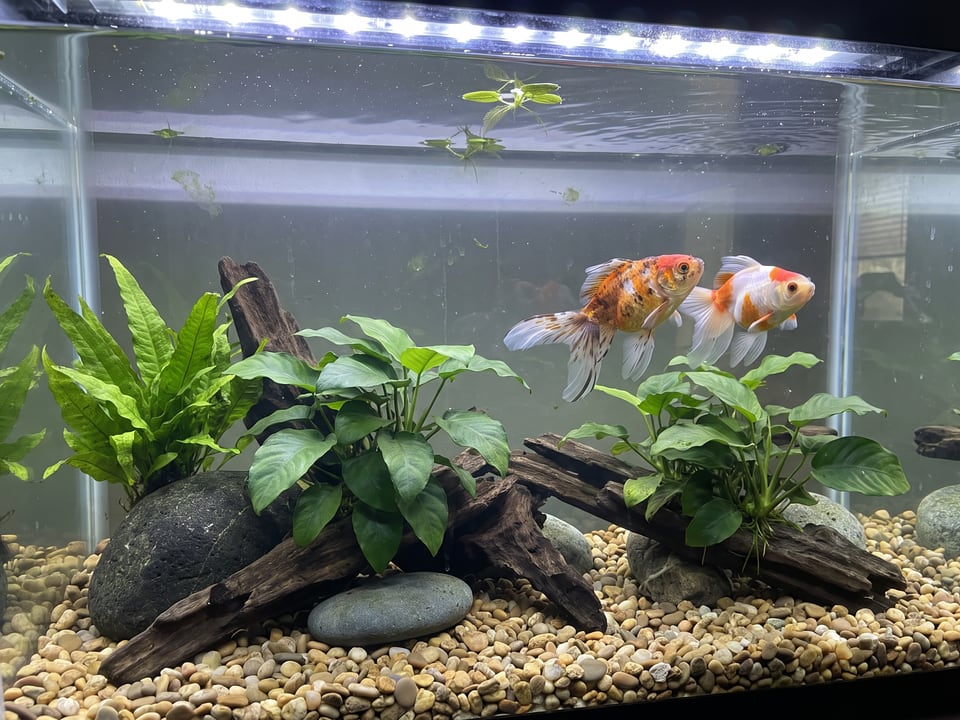
Goldfish eat soft plants and dig up rooted ones, so the plants that last in a goldfish tank have tough leaves and are tied to wood or rock instead of planted: anubias, java fern and bolbitis are the usual choices. They grow without added CO₂ in low to medium light and cope with the cooler water goldfish are kept in. Soft stem plants are more likely to be eaten.
Why goldfish are hard on plants
The Ornamental Aquatic Trade Association’s goldfish care sheet says goldfish readily eat live plants and suggests asking your retailer which ones are suitable. RSPCA Australia lists live plants as a source of food for goldfish. Aquarium Co-Op adds that goldfish dig up plants as well as nibble them.
Temperature
RSPCA Australia gives 20 to 24°C (68 to 75°F) as the ideal temperature for goldfish. The OATA sheet gives a wider 4 to 25°C and says a heater is not needed unless the room is very cold.
The plants in this guide are recorded from 18 or 20°C upward, which fits the RSPCA range. The cryptocorynes below start higher, at 22°C. Check the temperature range on each plant page against your room temperature in winter.
Plants that last with goldfish
Tough rhizome plants
These have thick leaves and grow on wood or rock, where a goldfish cannot uproot them.
- Anubias barteri, Anubias coffeefolia and Anubias congensis: Aquarium Co-Op recommends the larger anubias for goldfish because their leaves and rhizomes are bigger and thicker. All three are recorded at 20 to 28°C and need no added CO₂.
- Java fern and its forms, such as Windelov and Trident: long, leathery leaves, low to medium light, 20 to 28°C.
- Bolbitis heteroclita and African water fern: textured fronds that Aquarium Co-Op lists among goldfish-safe choices for being hard to eat.
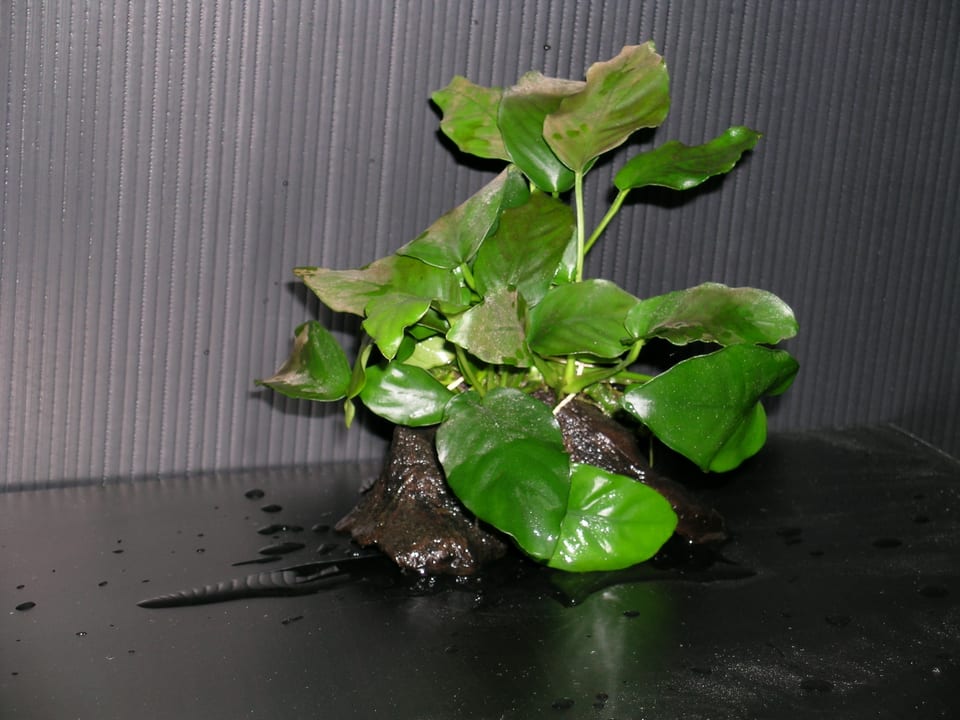
Tie or glue them to driftwood or rock; the planting guide shows how. Do not bury the rhizome.
Plants in the substrate, protected
Rooted plants need protection from digging. Aquarium Co-Op suggests ringing them with rocks or growing them in a planter.
- Cryptocoryne wendtii ‘Green’ and Cryptocoryne lucens: low to medium light and no CO₂, but recorded from 22°C, so they suit a goldfish tank kept at the warm end.
- Jungle val: tall background leaves, recorded at 18 to 28°C.
Rooted plants feed mainly through their roots. See fertilizer and root tabs for how to feed them in gravel.
Floating plants
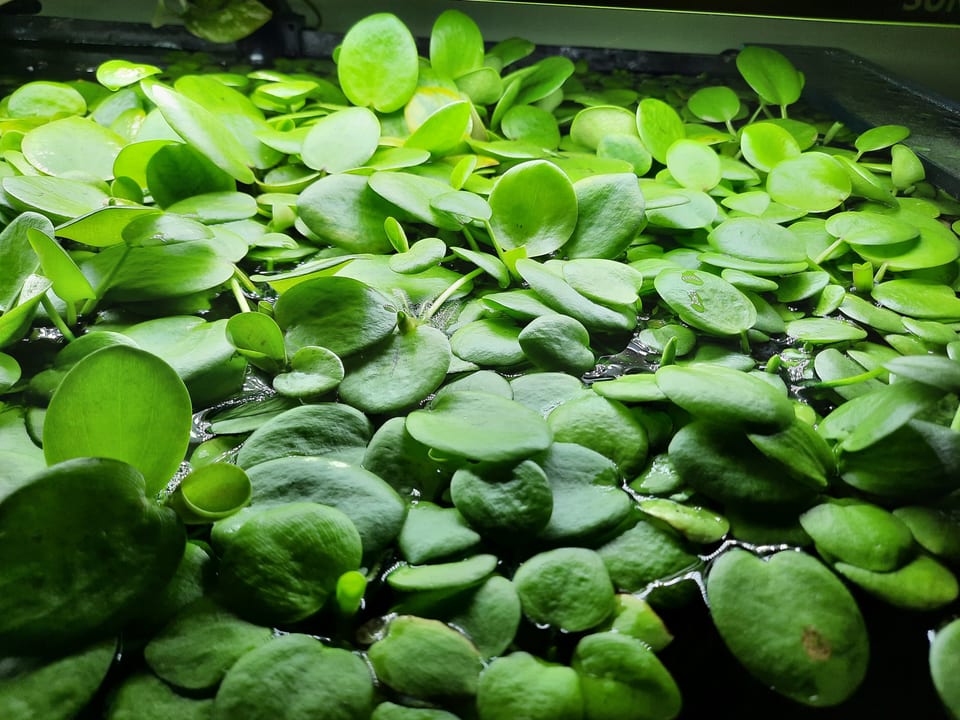
Amazon frogbit is recorded at 18 to 30°C and red root floater at 21 to 28°C. Goldfish may pick at the roots, but there is nothing in the substrate to dig up. RSPCA Australia recommends about half of the tank as plant cover with some open areas, so keep floaters to part of the surface.
Plants likely to be eaten
Hornwort and Egeria densa (anacharis) are soft, fast-growing stem plants. With goldfish, plan for them to be eaten rather than to fill the tank.
Live or artificial?
RSPCA Australia notes that artificial plants reduce stress as well as real ones, and that live plants add something on top: they take up waste products from the water and give the fish something to eat. The OATA sheet recommends plastic plants and ornaments that give shelter if you do not use live plants.
Frequently asked questions
Will goldfish eat java fern and anubias?
They can nibble them. Aquarium Co-Op says the thick leaves of java fern often survive in goldfish tanks and recommends the larger anubias for the same reason.
Do goldfish plants need a heater?
No. The OATA sheet says goldfish do not need a heater unless the room is very cold, and the rhizome plants above are recorded down to 20°C. In a cold room, check each plant’s temperature range.
Can I keep goldfish with a planted carpet?
It is hard. Carpeting plants are small and rooted in the substrate, where Aquarium Co-Op says goldfish dig up plants.