How to plant aquarium plants, java fern and anubias
Oct 4, 2026 · 6 min read
How to plant aquarium plants by type: tie java fern and anubias to wood, bury stem plants 2 to 3 inches deep, root-feed crypts, and split tissue culture cups.
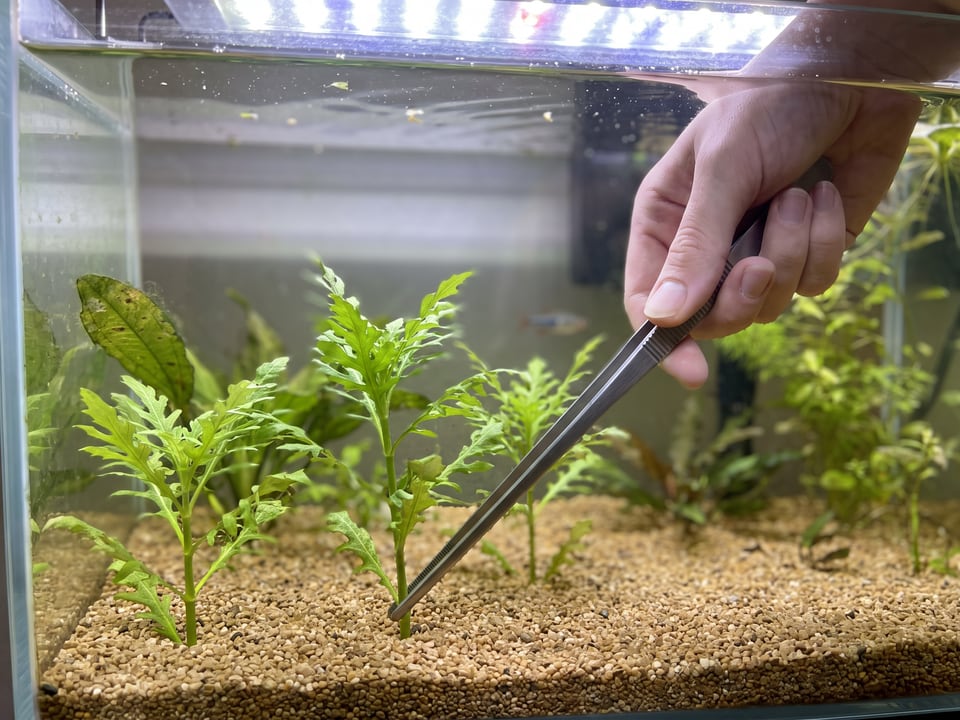
How you plant an aquarium plant depends on how it grows. Rhizome plants such as java fern and anubias are tied or glued to wood or rock, never buried. Stem plants are pushed 2 to 3 inches into the substrate one stem at a time. Rosette plants such as cryptocorynes go in with the roots buried and the crown at the surface. Tissue culture plants are rinsed free of gel and split into small clumps first. Each plant page in the catalog lists its type and where it goes in the tank.
Before you start
Check the plant type first. The catalog lists each plant as a stem, rosette, rhizome, moss or floating plant, and the type decides which method below applies.
Take off the pot, rock wool, lead weight, rubber band or ring. Aquarium Co-Op lists the basket, ring and band as the first things to remove from a stem bunch. While you work, keep the plants in a shallow dish of dechlorinated water so they don’t dry out. Long aquarium tweezers let you push a stem or a small clump into the substrate without pulling up what is already planted.
How to plant java fern, anubias and other rhizome plants
Do not bury the rhizome, the thick horizontal stem the leaves grow from. Buce Plant and Aquarium Co-Op both say a buried rhizome tends to rot.
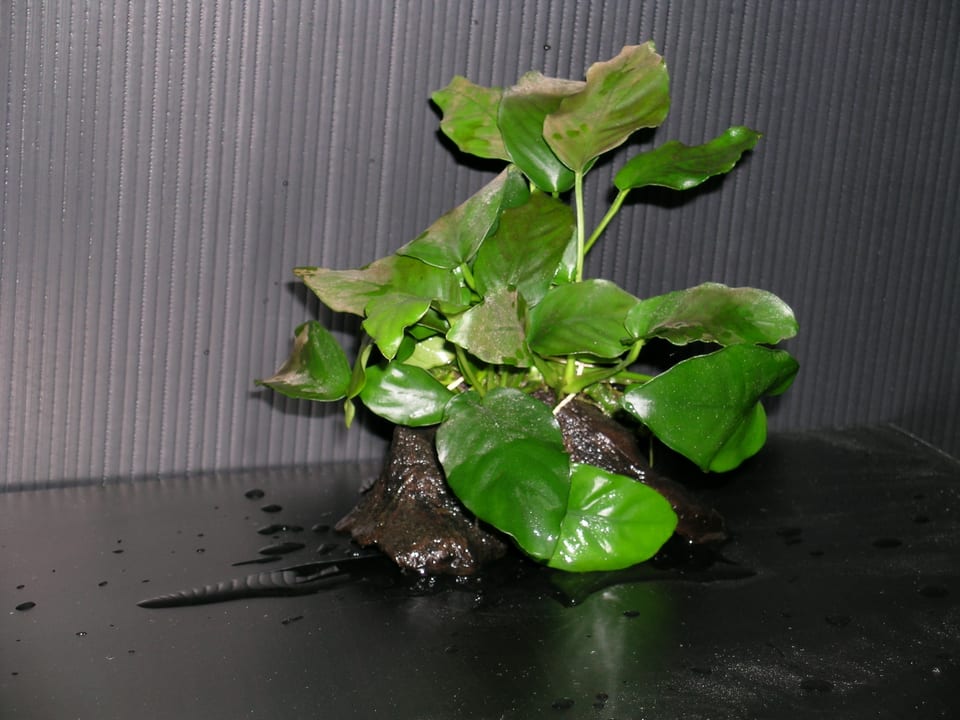
- Pick a spot on driftwood or a porous rock, or a crack between two rocks.
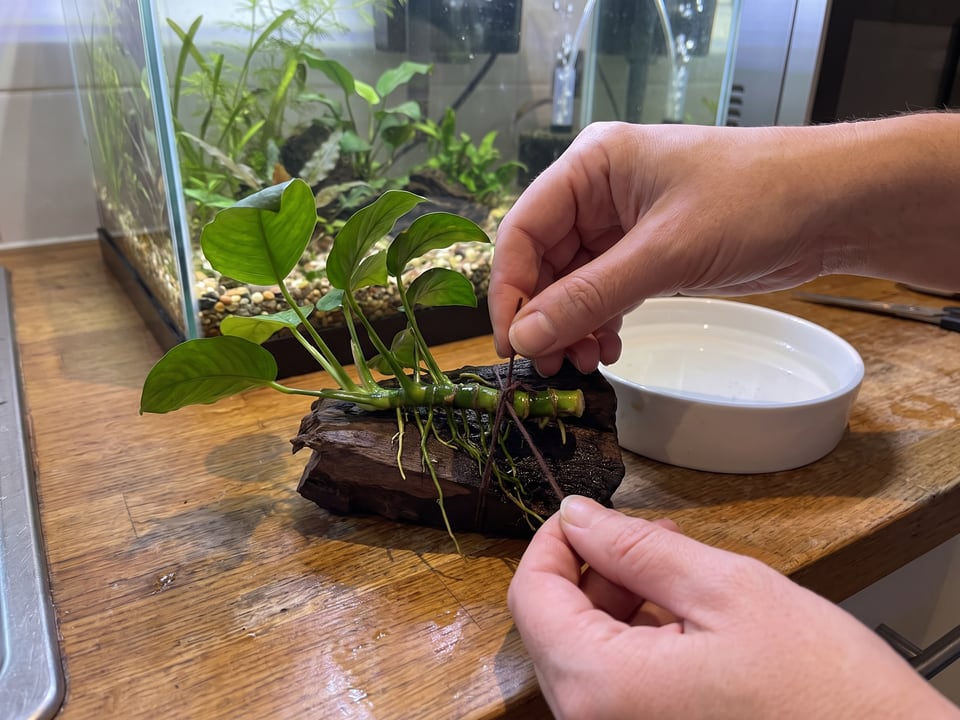
- Attach the rhizome with a dab of aquarium-safe super glue gel, or tie it on with cotton thread or fishing line. Aquarium Co-Op suggests both.
- Leave the roots free. They grip the surface over the following weeks, and the thread or glue no longer matters once they do.
If you want the plant in the substrate anyway, Aquarium Co-Op’s method is to press the rhizome and roots into the substrate, then pull the plant up gently by its leaves until the rhizome sits on top and only the roots stay buried.
This applies to java fern, Anubias nana, African water fern and bucephalandra. Rhizome plants take most of their nutrients from the water, so Aquarium Co-Op recommends feeding them with a liquid fertilizer.
How to plant stem plants
- Separate the bunch into single stems.
- Push each stem 2 to 3 inches into the substrate with tweezers. Aquarium Co-Op says some of the lower leaves may end up buried, which is fine.
- Leave a little space between stems so the roots have room.
- If a stem keeps floating up, wrap a plant weight around its base.
Stems without roots can float at the surface until roots appear and be planted then. Stem plants also take nutrients mainly from the water. Examples: water wisteria, Bacopa monnieri, Ludwigia repens. See all aquarium stem plants.
How to plant cryptocorynes and other rosette plants
- Push the roots deep into the substrate with tweezers.
- Leave the crown, where the leaves meet the roots, at the surface.
- In plain sand or gravel, push a root tab into the substrate near the plant.
- Do not move it again.
Buce Plant calls crypts heavy root feeders and recommends root tabs in inert substrate. It also explains crypt melt: a plant grown out of water drops its old leaves after planting and grows new underwater leaves, usually within a few weeks if left in place. Examples: Cryptocoryne wendtii ‘Green’, Cryptocoryne undulata, dwarf sagittaria.
How to plant tissue culture plants
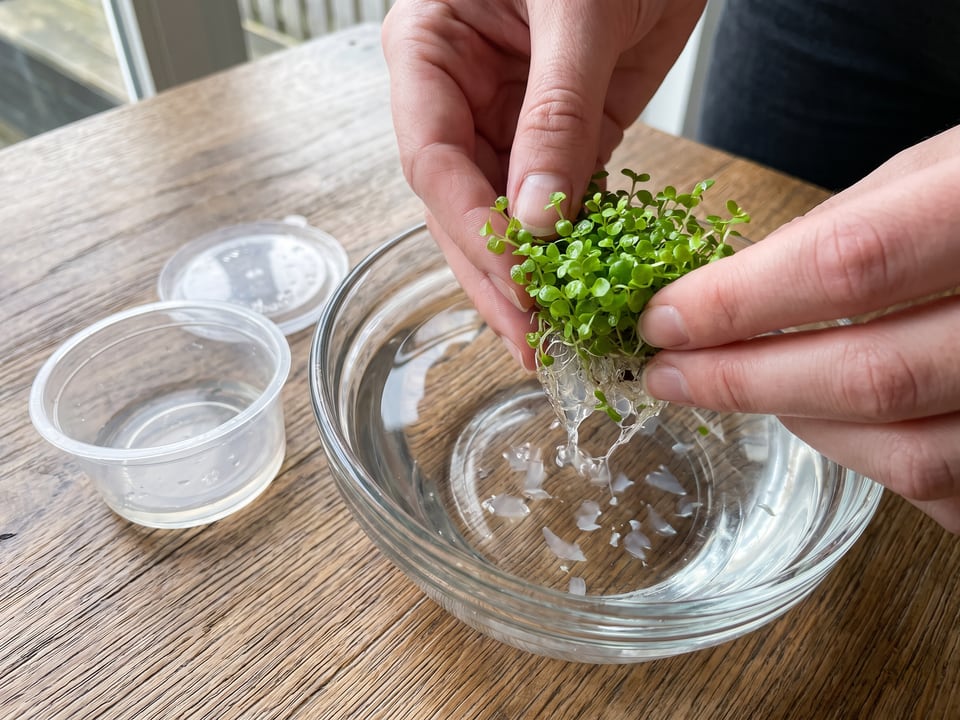
Tissue culture cups hold a lab-grown clump in a nutrient gel. Aquarium Co-Op and Buce Plant describe the same steps:
- Pull the clump out of the cup.
- Rinse the gel off in a bowl of dechlorinated water. Throw the gel in the trash, not down the drain.
- Split the clump into small portions.
- Plant each portion with tweezers, about halfway into the substrate.
A tissue culture rhizome plant, such as bucephalandra, still goes on wood or rock, not into the substrate.
How to plant carpeting plants
Carpeting plants, such as dwarf baby tears or Monte Carlo, are planted the tissue culture way: many tiny portions spaced across the foreground, so they spread into one another. In the catalog, dwarf baby tears is rated as needing added CO₂ and high light, and Monte Carlo as growing better with CO₂; check each plant before you buy. See carpeting aquarium plants.
Mosses and floating plants
Mosses have no roots to plant. Spread a thin layer over wood or rock and tie it down with thread, or sandwich it in mesh. See aquarium mosses.
Floating plants such as Amazon frogbit and red root floater just go on the water surface. Keep them in still water, away from the filter outflow. See floating aquarium plants.
Frequently asked questions
Can I plant java fern in gravel?
Only the roots. If the rhizome is buried it tends to rot. Tie or glue it to wood or rock, or bury only the roots and leave the rhizome on top.
Why are my new plants melting?
Many plants are grown out of water at the farm and drop those leaves once submerged. Crypts are the best-known case. Leave the plant in place; new underwater leaves usually follow within a few weeks.
Do I need root tabs?
Plants that feed through their roots, such as cryptocorynes, do better with root tabs in plain sand or gravel. Rhizome plants, stem plants and floating plants feed mainly from the water, so a liquid fertilizer suits them.