Best plants for a shrimp tank: mosses and more
Oct 4, 2026 · 4 min read
Plants for a shrimp tank: mosses and fine-leaved plants to graze on, low light and no CO₂, plus cover for molting shrimp. What to pick and why.
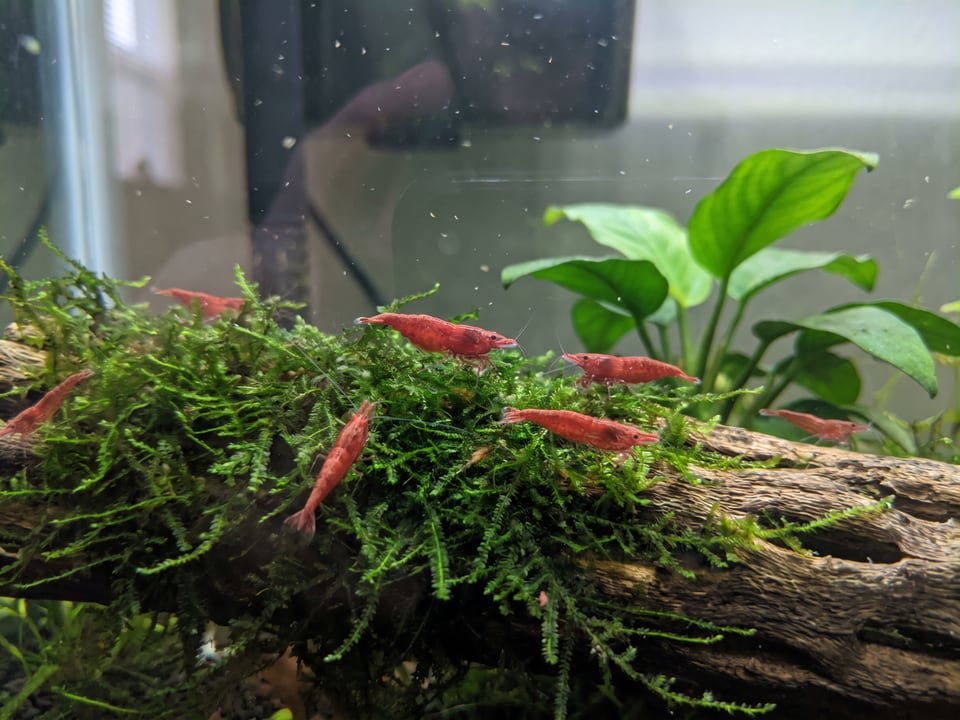
The best plants for a shrimp tank are ones with a lot of surface for shrimp to graze on and that grow without strong light or added CO₂: java moss and other aquarium mosses, subwassertang, small anubias and bucephalandra on wood, and a few floating plants for shade. Shrimp feed on the film of algae and microorganisms that builds up on leaves, so finely divided plants give them the most food per inch of tank.
Why plants matter in a shrimp tank
UF/IFAS describes the cherry shrimp (Neocaridina davidi) as a grazer that feeds on algae, biofilms and dead plant and animal matter. In a planted tank, much of that grows on the plants themselves. A tank of bare glass and gravel gives a shrimp little to pick at between feedings.
Shrimp shed their shell to grow and are soft for a while afterwards. Dense plants give them somewhere to hide until the new shell hardens.
Mosses: the first choice
Mosses have many tiny leaves on branching shoots, which means a lot of surface for biofilm in a small space. All the mosses in the catalog are rated easy, grow in low to medium light, and need no added CO₂.
- Java moss: rated medium for growth rate, where the other mosses here are rated slow.
- Christmas moss: denser, layered branches.
- Flame moss and spiky moss: upright growth, good on vertical wood.
- Weeping moss: drooping shoots that hang over the edge of wood.
Our sources record these mosses at 18 to 25°C. That suits a room-temperature shrimp tank better than a tropical community tank kept near 28°C. See all aquarium mosses.
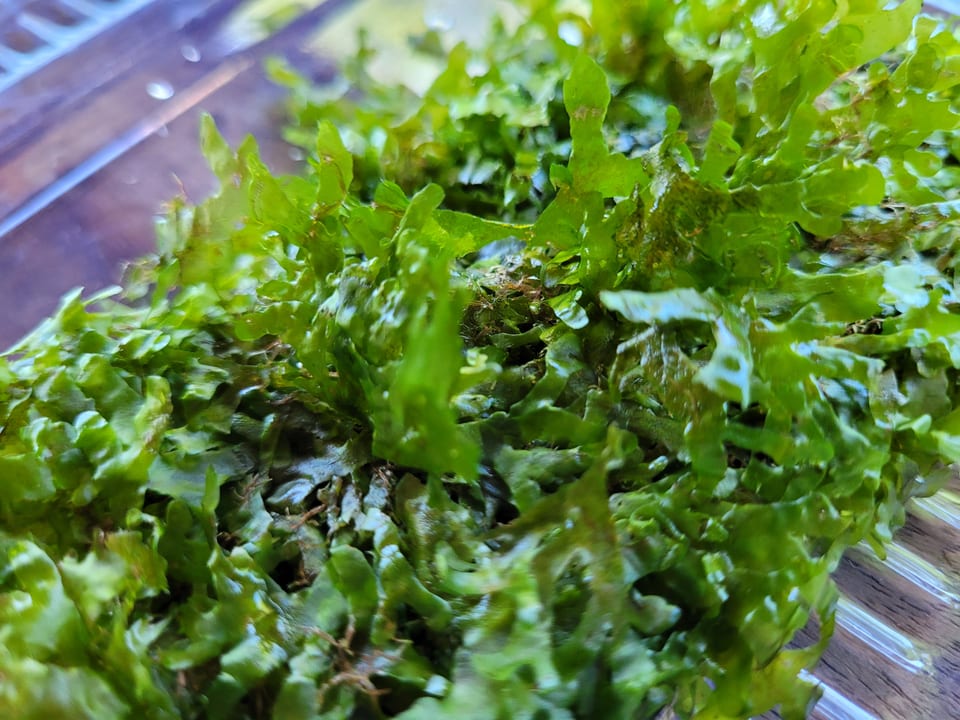
Subwassertang is not a moss but grows the same way, as a loose, lobed mat on wood or rock, and is rated easy for low to medium light.
Small plants on wood and rock
Anubias nana, Bucephalandra ‘Black Pearl’ and java fern grow slowly in low to medium light without CO₂. Their leaves are broad and flat, so shrimp can walk across them while they graze. They are tied or glued to wood or rock, never buried: see the planting guide.
Stem and floating plants
Fine-leaved stem plants give more grazing surface than broad leaves. Pearl weed and Myriophyllum mattogrossense both have small or finely divided leaves; pearl weed needs no added CO₂, while Myriophyllum is rated as growing better with it.
Floating plants such as red root floater, Amazon frogbit and Salvinia natans shade the tank and grow long roots that hang into the water. See floating aquarium plants.
What to check before adding a plant
A shrimp tank rarely needs strong light, so plants rated for low light and no CO₂ are the least work. Each plant page lists the temperature range its source gives; compare it with your tank.
Potted plants can carry snails and other hitchhikers. Aquarium Co-Op points out that tissue culture cups are grown in a sterile lab and arrive without them. Rinse off the gel before planting, as described in the planting guide.
We do not rate plants or fertilizers as safe or unsafe for shrimp. If you dose fertilizer in a shrimp tank, read the product’s own label for invertebrates.
Frequently asked questions
Do shrimp eat live plants?
Shrimp graze the film on plants. UF/IFAS lists algae, biofilms and dead plant matter among the foods of cherry shrimp, so a melting or dying leaf is the part most likely to be eaten.
What is the easiest plant for a shrimp tank?
Java moss is a good first choice. Our sources rate it easy, for low to medium light and no added CO₂, and it can be tied to wood or rock.