Aquarium plants turning brown or melting: causes and fixes
Oct 4, 2026 · 5 min read
Why aquarium plants turn brown: melting after planting, brown algae (diatoms) on the leaves, a buried rhizome, too little light or nutrients, and java fern spores.
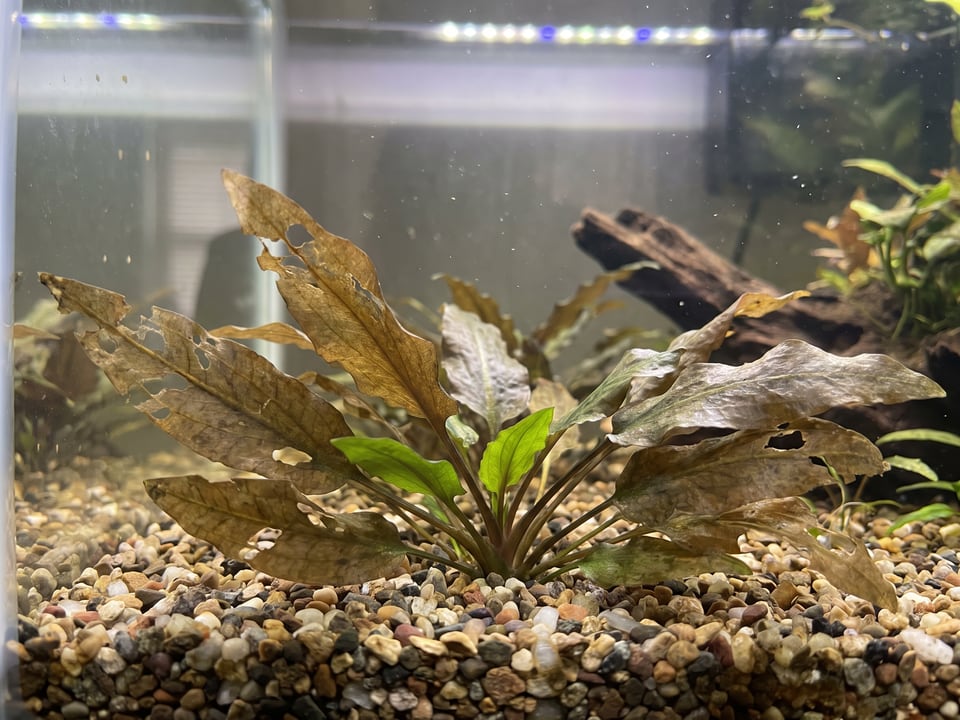
When aquarium plants turn brown, the usual causes are a new plant shedding the leaves it grew out of water, a coating of diatoms (often called brown algae) on otherwise healthy leaves, a buried rhizome that is rotting, or a shortage of light or nutrients. On java fern, small dark spots under the leaves are often spores, which are normal. Start by rubbing a brown leaf: if the brown wipes off, it is algae; if it doesn’t, the leaf itself is dying.
Brown coating that wipes off: diatoms
A soft brown film on leaves, glass and decorations, usually in a tank a few weeks old, is diatoms. Buce Plant says they tend to appear one to three weeks after setup, while the tank is still cycling, and that they use silica, which is common in tap and well water.
To deal with them:
- Rub the film off the leaves with your fingers or a soft toothbrush, as Buce Plant suggests, so it does not block light.
- Keep up regular maintenance. Buce Plant says diatoms should fade as the tank matures.
- Add grazers if you want help. Buce Plant lists nerite snails, Amano shrimp and otocinclus among the animals that eat diatoms.
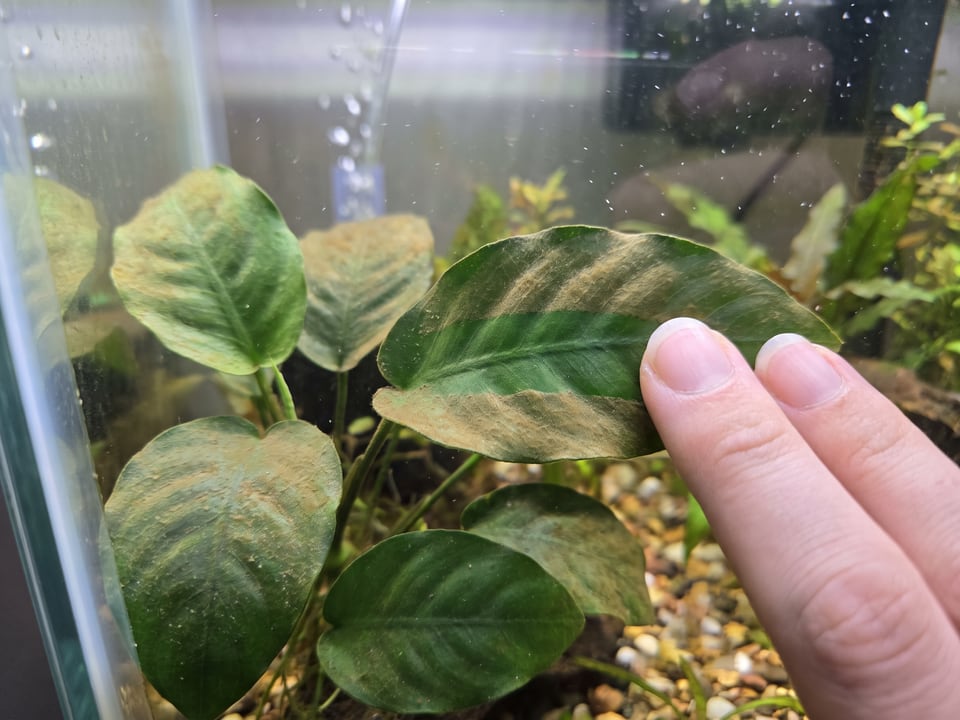
Aquarium Co-Op also recommends adding more plants, which compete with the diatoms for nutrients.
New plants melting
Many plants are grown out of water at the farm. Aquarium Co-Op explains that once submerged, such a plant has to switch to underwater growth, and the old leaves often turn brown or translucent and fall apart while new ones grow. Cryptocorynes are the best-known case. Buce Plant says new leaves usually follow within a few weeks if the roots are healthy and the plant is not moved.
What to do: trim the melting leaves so they do not rot in the tank, leave the plant where it is, and give root feeders a root tab. See how to plant aquarium plants.
Aquarium Co-Op adds that a change in water conditions, such as moving a plant to a new tank, can cause the same browning, and that a plant frozen during shipping may melt too; in that case, contact the seller.
A buried rhizome
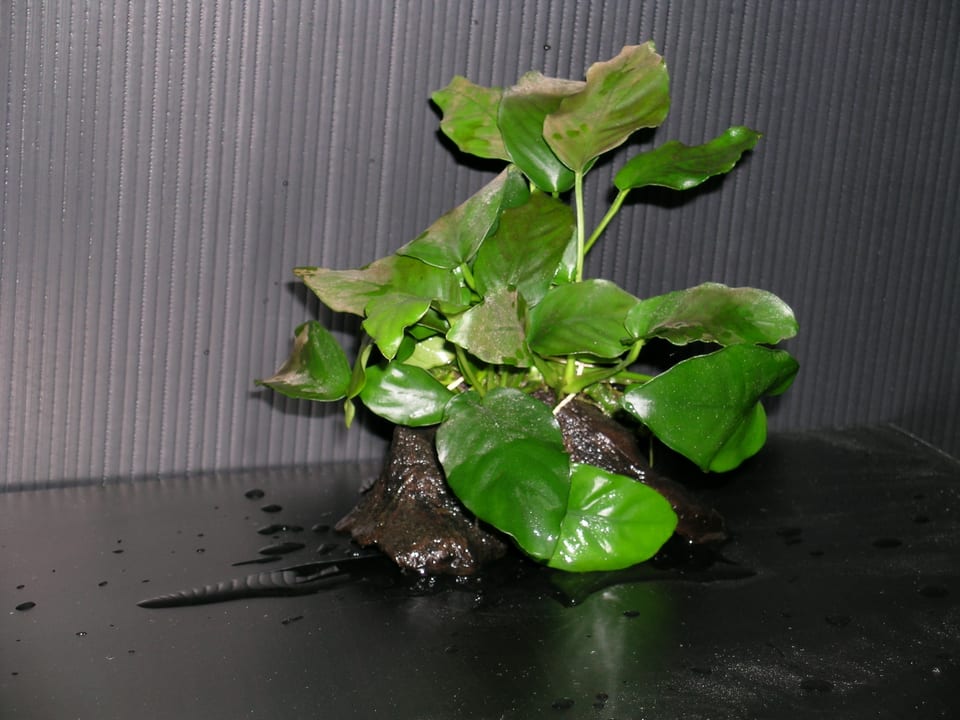
Java fern, anubias, bucephalandra and bolbitis grow from a rhizome, the thick horizontal stem the leaves come from. Buce Plant’s java fern guide calls a buried rhizome the most common mistake and says it leads to rot and blackened leaves.
Lift the rhizome out of the substrate and tie or glue it to wood or rock, leaving only the roots buried if you plant it at all. If part of the rhizome has turned mushy, which Aquarium Co-Op describes as anubias rot, cut that part away.
Not enough light or nutrients
Aquarium Co-Op says too little light or too few nutrients can make leaves yellow and die off. Its fertilizer guide describes two common shortages:
- short of iron, the newest leaves turn pale or yellow while the veins stay dark;
- short of potassium, leaves get small holes or the plant grows poorly. Buce Plant links potassium shortage to blackening and pinholes on java fern.
Check the light and CO₂ each plant needs on its catalog page, then see aquarium fertilizer and root tabs for how to feed it. If tall plants shade the ones below, Aquarium Co-Op suggests trimming them so more light gets through.
Too much light or poor water
Buce Plant’s java fern guide also names high ammonia from decaying matter and poor filtration as a cause of black spots, and recommends regular water changes. It notes that too much light can damage java fern and suggests 6 to 8 hours of light a day.
Dark spots on java fern that are normal
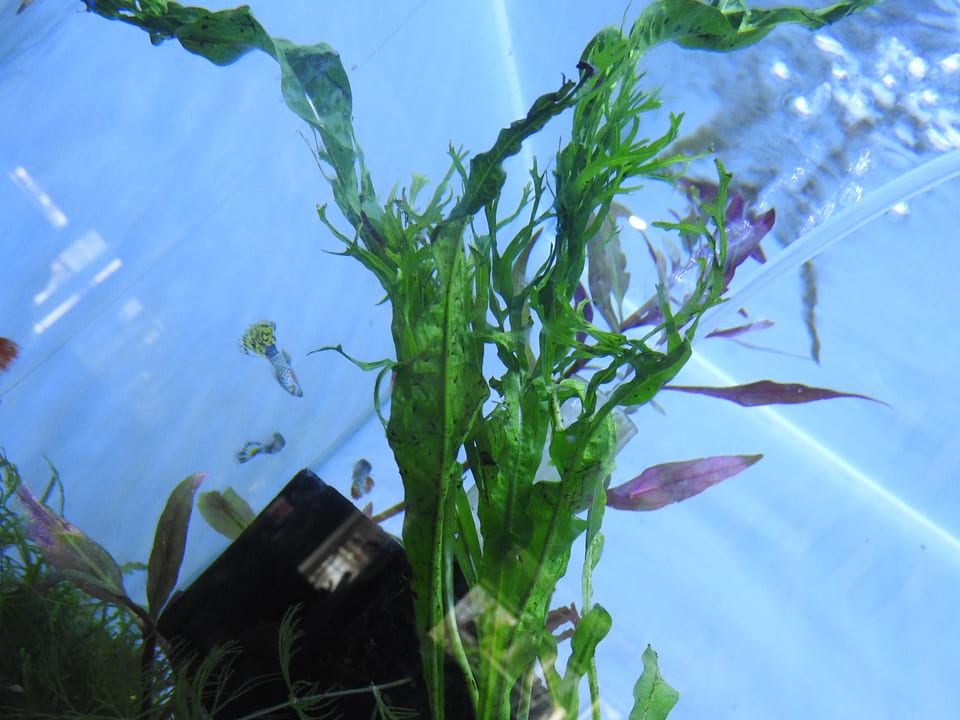
Java fern reproduces from spores that form in small dark patches on the underside of mature leaves. According to Buce Plant, even spots on the underside of older leaves are spores and need no treatment, and they can grow into small new plants that you can move elsewhere in the tank. Spots that spread across the leaf, together with holes or soft tissue, point to one of the causes above.
Frequently asked questions
Should I remove brown leaves?
Yes, if the leaf is dying rather than coated. Aquarium Co-Op recommends removing melting leaves so they do not decay in the tank. A leaf that is only coated with diatoms can stay once it is wiped clean.
Will a melted plant grow back?
A crypt with healthy roots usually regrows within a few weeks, according to Buce Plant. For anubias rot, Aquarium Co-Op’s advice is to cut away the soft part and see whether the rest survives.
Why are only my new plants turning brown?
Usually it is the switch from emersed to underwater growth described above, or diatoms in a tank that is only a few weeks old.